Heritage · 3 min read
Al Fahidi and Shindagha: Walking the Heritage Quarters
Wind towers, courtyards and the Creek give these two Bur Dubai districts different reasons to visit. Check individual buildings rather than assuming every interior is open.
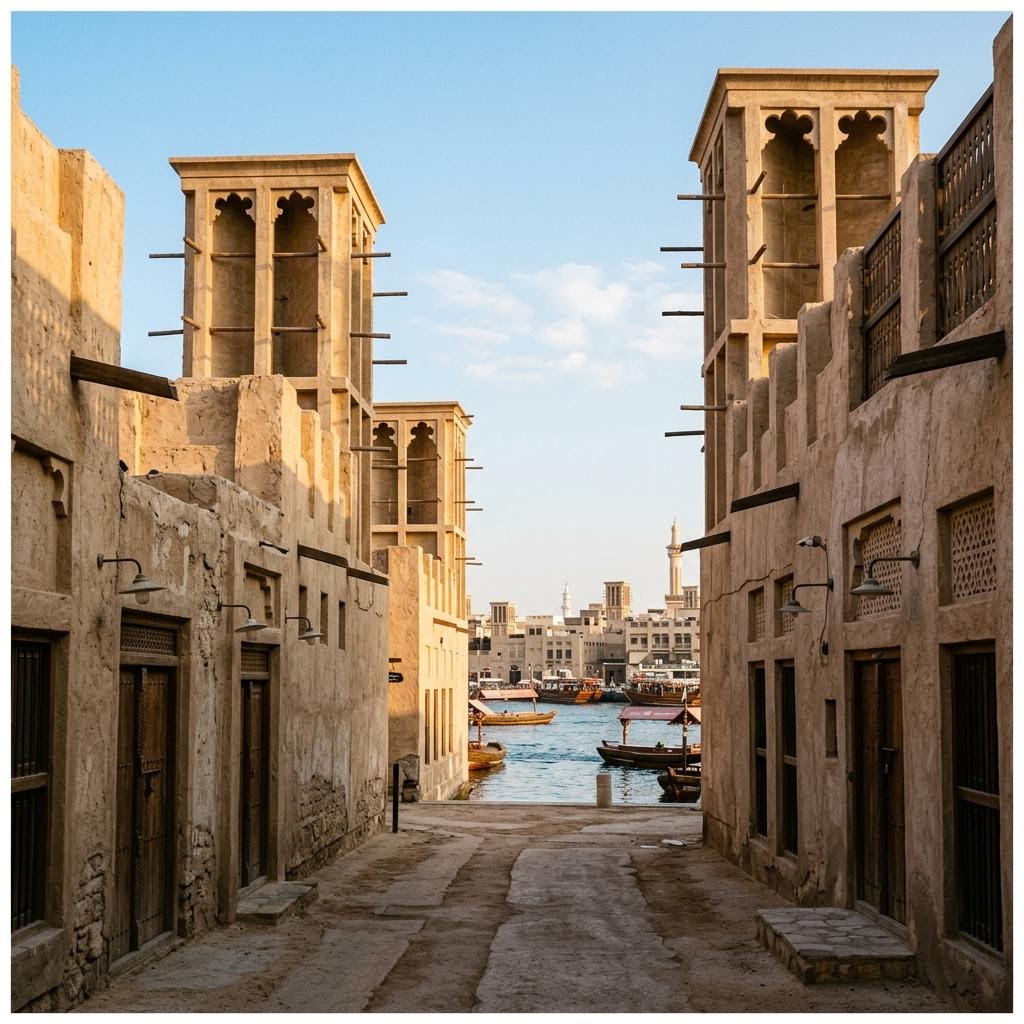
Why these neighbourhoods matter
Al Fahidi Historical Neighbourhood, also known as Bastakiya, sits beside the Creek in Bur Dubai and is cared for by Dubai Culture. Al Shindagha lies nearer the Creek’s mouth, with links to the ruling family and seafaring life. They are distinct districts on the same side of the water.
Together they give a rare chance to see how a trading town housed its people. The houses are low, close together and built around courtyards, with narrow lanes that create shade and encourage a little airflow. It is a human-scale city, and walking it is the best introduction to the pace of the old town.
Reading the buildings
Look first at the materials. Traditional houses were built with coral stone, gypsum, sand and timber, all drawn from the local environment. Walls are thick, windows are small and many rooms open onto shaded courtyards. These choices were not decorative; they were climate strategies developed over generations before air conditioning.
Then look up. Wind towers, known as barjeel, catch breezes and channel them into the rooms below. They are one of the most recognisable features of the district and a good example of design that responds directly to heat. Many buildings you see have been restored, so notice the inscriptions and information panels that explain what is original and what is renewed.
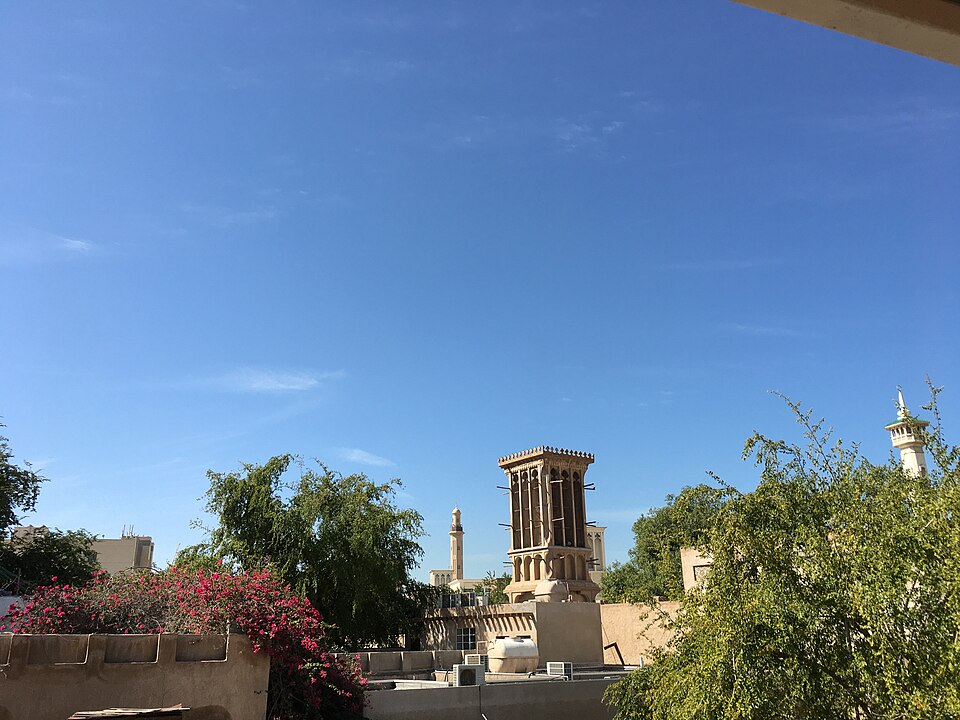
Inside the lanes
Today the quarter is home to galleries, small museums, cafes and cultural centres. Some are run by public bodies and others by independent operators, and hours differ. Check current times locally before you plan a visit, and expect some places to close in the afternoon or on certain days.
Take your time rather than ticking off sights. The pleasure of Al Fahidi lies in turning corners: a doorway with carved details, a courtyard with a single tree, the sound of a call to prayer drifting over the roofs. Dress modestly out of respect for the setting, and ask before photographing people.
The waterfront at Shindagha
Shindagha offers a different mood, facing the water with a broader horizon. It is associated with the early residences of the ruling family and with museums and heritage displays that interpret the history of Dubai. A walk along the water gives a sense of how close the town always was to its harbour.
The district has also been the subject of long-term regeneration, with older structures conserved and new cultural facilities added. As with any heritage project, it blends preservation with interpretation, so read signs carefully and consider what has been recreated, restored or newly built.
Visiting with care
Choose the cooler hours for walking, usually early morning or the hours after the sun lowers, particularly from late spring to early autumn. Wear comfortable shoes, carry water and keep voices low in residential-feeling lanes, where residents and workers go about their day.
Combine your walk with an abra crossing to see the area from the water, then continue to the markets on the Deira side. The route connects heritage and commerce, which is exactly how the original town functioned. When you finish, you will have a more grounded sense of where the modern city came from.
Context from the wider emirate
Heritage in Dubai extends beyond these two districts. Other historic areas, forts and villages sit across the emirate, and each tells a slightly different part of the story. The official cultural authority publishes information on sites open to the public, which is the best place to confirm what can be visited and when.
Seeing more than one helps to avoid a common mistake, which is to treat the preserved quarter as the whole of the past. It is a carefully chosen and cared-for sample of a much larger and more varied history.
Independent and unofficial. Details change; confirm with official sources before you travel.