Food & heritage · 2026 guide · 2 min read
Al Fahidi: reading windtowers, lanes and privacy in the architecture
Dubai Culture’s description helps you interpret the neighbourhood’s built form. Architectural interest does not imply permission to enter every courtyard or cultural institution.
- Published
- Sources checked
- Not separately recorded
- Content updated
- By
- ComeVisitDubai editorial
Update note: Refocused this article around a distinct planning question and linked companion coverage. Publication and existing source-check records are preserved; this revision is not a fresh verification of every source. Edited for clarity and repetition, with contextual photographs added. This copy edit is not a new full-article source check.
Based on the linked sources, not a first-hand visit. “Today” and “this week” refer to the publication date. Source checks and later edits are recorded separately. Editorial method and attribution.
Look at a settlement, not a list of monuments
Dubai Culture places Al Fahidi Historical Neighbourhood along Dubai Creek and relates it to traditional life from the mid-nineteenth century to the 1970s. Its account emphasises neighbouring buildings, alleys, pathways and public squares. That provides a way to read the spaces between buildings as well as individual facades.
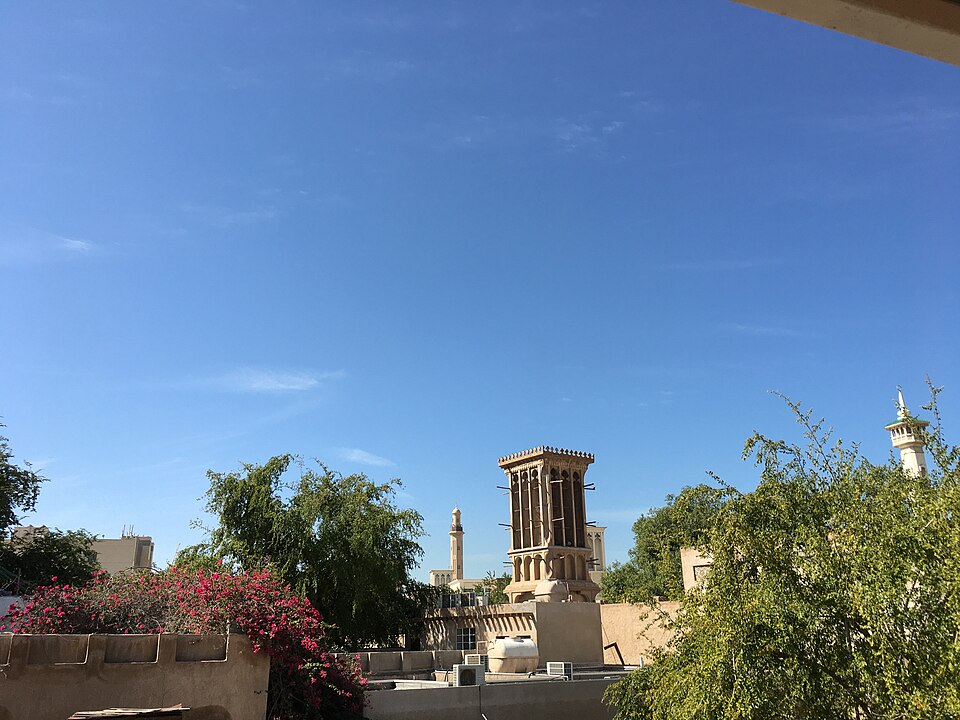
Windtowers and materials explain environmental choices
The official description names the barajeel, or air towers, and materials including stone, gypsum, teak, fronds and palm wood. These details connect visible architecture to older approaches to climate and construction.
During a visit, look for differences in height, material and the relationship between a tower and the rooms below. These are suggested observation questions, not findings from a walk we documented or a claim that every visible feature is original.
Read the lanes alongside the windows
Dubai Culture links narrow, high front windows and winding alleys to privacy. That makes a useful second question: how does the layout control what a passer-by can see? The neighbourhood need not be treated simply as a photogenic collection of doorways.
Respect barriers and private or restricted interiors. A courtyard may be architecturally interesting without being publicly accessible, and a building hosting a cultural institution can have its own hours and admission arrangements.
Access evidence has limits
The Dubai Culture page identifies galleries, museums and cultural organisations in the neighbourhood and provides visitor information. It does not establish one shared opening timetable or an all-buildings ticket. Check the specific institution you hope to enter before making it the anchor of your visit.
For a route joining this stop to Al Shindagha, use the Creek itinerary. For a museum admission decision, use the Al Shindagha guide. This article’s purpose is interpreting architectural form, not promising entry or a tested accessible walk.
Independent and unofficial. Part of an editorial selection of 90 topics, not a popularity ranking. Details change; confirm with official sources before you travel.
You might also want to read

Al Fahidi and Al Shindagha: sequence two Creek-side stops without rushing
Anchor the day to a confirmed museum or cultural booking, then add an architectural walk if time and access allow. The two districts are distinct stops, not opposite-bank substitutes.
Read · 2 minAl Shindagha: plan museum access separately from festival programming
A museum booking and a past Sikka programme are not the same visit. Check the houses included, last entry and meeting point before planning a heritage stop.
Read · 2 min
Yolk Brands Dubai: from a JLT burger shop to overseas expansion
Pickl, BonBird and Southpour Coffee share a Dubai-based parent company. Here is what Yolk Brands does, where its expansion plans stand and how to find the right restaurant for a meal.
Read · 4 min