City development · News analysis · 4 min read
Al Maktoum airport’s 2026 milestones: a long-term project, not an overnight move
The June announcement targets 2032 for a first operational phase while work continues at both DWC and DXB. It is not an instruction to change the airport on your ticket.
- Published
- Earlier source-check record
- Not separately recorded
- Content updated
- By
- ComeVisitDubai editorial
Update note: Edited for clarity and repetition, with contextual photographs added. This copy edit is not a new full-article source check.
Based on the linked sources, not a first-hand visit. “Today” and “this week” refer to the publication date. Source checks and later edits are recorded separately. Editorial method and attribution.
Why the June 2026 announcement matters
Dubai Media Office’s June 15 update frames Al Maktoum International Airport as a long-term infrastructure program rather than an imminent change. The first phase is proceeding on schedule for a 2032 operational start. This confirms the project is a multi-year build, not a signal that Dubai International Airport (DXB) is closing immediately. This distinction is vital for those misreading development news as an operational switch.
The update also shows multiple delivery streams moving concurrently. Milestones include enabling works, runway infrastructure, and foundational work for terminals. The project has advanced beyond conceptual planning but remains in the heavy construction and contracting phase. For observers, 2026 is a year of implementation, while 2032 remains the target for the first phase of operations.

A new airport project, not a blank-slate airport story
Al Maktoum International is not a new creation but an expansion of the existing Dubai World Central complex. Dubai Aviation Engineering Projects is also upgrading infrastructure at DWC, including passenger terminals and boarding facilities linked to flydubai’s fleet expansion. The June 2026 milestone represents a massive strategic scaling of an existing aviation node.
The project aims to integrate future terminals, concourses, and multimodal links. This does not mean today’s airport operations are becoming irrelevant. Dubai is layering a significant capacity expansion onto a functioning airport environment while simultaneously modernizing its current aviation network.
What the June milestone list actually shows
Dubai Aviation Engineering Projects reported packages under execution exceeding AED13 billion, with more than AED55 billion in further strategic projects being prepared for award. The June milestones included over 17,000 concrete piles, excavation exceeding 45 million cubic metres and about 4.5 million cubic metres of concrete for core infrastructure. It also reported completion of the second runway ahead of rehabilitation of the existing one.
The site demands huge labor, with 9,000 workers reported on site in the June update and a peak projection of 120,000. Megaprojects evolve through overlapping packages and site activity. For residents and visitors, this indicates that airport expansion is a long industrial process involving complex dependencies rather than the simple opening of a new terminal.
The long build toward a larger aviation hub
The project aims to create the world’s largest aviation hub, with capacity for 260 million passengers and 12 million tonnes of cargo. Planned infrastructure includes five parallel runways, two terminals, seven concourses, 430 aircraft stands, and automated people movers. It is designed as a multimodal logistics ecosystem rather than a standalone check-in hall.
Readers should separate this long-term capacity rhetoric from near-term reality. The master plan defines the end-state, not the immediate future. Because Dubai projects move quickly, observers can assume milestones are closer than they are. The 2032 target represents the opening of the first operational phase, not the full completion of the ultimate vision.

How this fits Dubai’s wider aviation strategy
The update is tied to the Dubai Economic Agenda, D33, framing Al Maktoum International as a foundational element of long-term economic resilience, growth, and global connectivity. It serves as an enabler for economic diversification, positioning the airport as a strategic asset.
The finance and governance dimension is also critical. Dubai Finance positions the airport as a sovereign asset intended to attract regional and international investment. This project serves as a case study for how Dubai links transport infrastructure to tourism, trade, logistics, and capital confidence.
The role of Dubai International Airport in the meantime
The update avoids suggesting an abrupt shift from DXB. Dubai Aviation Engineering Projects is maintaining a comprehensive improvement program for both DXB and DWC. At DXB, work includes access bridge improvements, road network upgrades, airfield flexibility enhancements, and modernized boarding facilities.
The term “smooth and carefully managed transition” refers to a long-term planning principle, not an imminent migration. Dubai is pursuing parallel tracks: enhancing the existing hub while scaling the new one. Dubai’s aviation map in 2026 remains additive and transitional.
What to watch from here to 2032
The June 2026 milestones act as a checklist for future progress. Forthcoming contracts for the Western Passenger Terminal, the fourth concourse, automated systems, and terminal superstructures will determine if the 2032 target remains realistic. Future facade, roofing, and airfield infrastructure packages will further define the project’s trajectory.
For those tracking the project, the primary attribute is patience. The milestone update confirms funding and momentum but not a completed airport. Dubai is executing a dual strategy: a larger future hub at Al Maktoum and ongoing capacity upgrades at the current hub. The project’s significance lies in this steady, deliberate assembly.
Independent and unofficial. Part of an editorial selection of 90 topics, not a popularity ranking. Details change; confirm with official sources before you travel.
You might also want to read
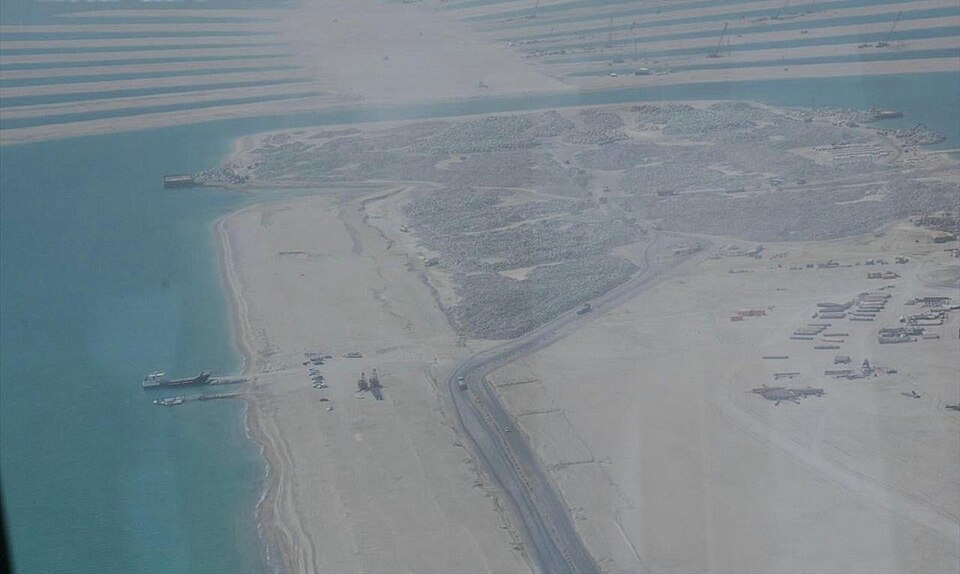
Palm Springs Dubai: what Nakheel’s new community plan includes
Nakheel’s 10 November announcement sets out a residential community beside Palm Jebel Ali, with 15 neighbourhoods, schools and extensive open space. Here is what is planned—and what the launch does not confirm.
Read · 4 min
Dubai Exhibition Centre: a visitor guide for November 2026
The Expo City venue hosts Automechanika Dubai from 10–12 November. Check registration, transport and accessibility details, and separate the operating centre from its future expansion plans.
Read · 3 minExpo City Dubai master plan: what was announced and what to check now
The October 2024 blueprint sets out a phased district, not a completed city. Separate inherited infrastructure, announced neighbourhoods and evidence of opening before planning a visit.
Read · 2 min