Business & innovation · News analysis · 4 min read
Dubai and Abu Dhabi stocks: why concentrated ownership matters beyond market size
Large market values do not tell investors how many shares are available to trade. New reporting raises questions about control, buyouts and the supply of publicly held UAE equities.
- Published
- Sources checked
- By
- ComeVisitDubai editorial
Based on the linked sources, not a first-hand visit. “Today” and “this week” refer to the publication date. Source checks and later edits are recorded separately. Editorial method and attribution.
A big exchange can still offer a limited pool of shares
Dubai and Abu Dhabi’s stock markets are large by any local measure. The UAE Capital Market Authority put their combined market capitalisation at AED 3.7 trillion at the end of September 2026. Yet market size and the number of shares readily available to outside investors are different questions. A company can have a substantial valuation while a small group retains most of its equity.
Bloomberg reporting republished by Energy Connects on 16 November brings that distinction into focus. It describes concentrated ownership, slower new listings and buyouts as constraints on the UAE’s efforts to attract international investors. This is not a claim that either exchange has stopped functioning. It is a question about how much choice and trading capacity remain when controlling stakes stay large and listed businesses are taken private.
What the concentration figures actually measure
According to the Bloomberg compilation cited in that report, two shareholders control more than 70% of equity in more than four out of ten companies in Dubai’s benchmark index. For Abu Dhabi, the reported proportion is more than one in three. The comparable Saudi figure is roughly one in twenty. Those are proportions of benchmark companies meeting a particular ownership threshold, not percentages of all shares on each exchange.
The scope matters. These figures do not mean two people own 70% of the whole Dubai market, nor that every listed firm has the same structure. We have not independently rebuilt Bloomberg’s company-level dataset. The comparison is attributed reporting, and its benchmark sample should stay attached to the numbers. Broad statements about every UAE company would go beyond the evidence.
Free float is not the same as trading activity
Free float broadly describes shares available for public trading after holdings treated as strategic or otherwise excluded under the relevant methodology. A large controlling stake can leave a smaller pool for other investors. That may make substantial orders harder to execute without affecting the price. It does not, on its own, prove that a particular share is illiquid; turnover, the order book and transaction size also matter.
There is a useful counterpoint in Dubai Financial Market’s nine-month investor presentation. It reports foreign investors accounting for 51% of trading activity, while foreign ownership represented 19% of market capitalisation. These measures describe different things: transactions during a period versus holdings at a reporting point. Strong foreign trading participation can coexist with concentrated control. Neither percentage should be substituted for the other in a headline.
Buyouts change the choices facing minority holders
Bloomberg’s report identifies Emaar Properties’ proposed purchase of the remaining shares in Emaar Development as one example. A proposed buyout can offer minority holders a cash exit, but it can also remove future participation in a business if a delisting follows. Investors must weigh the offer terms against their own assessment of value; an announced premium does not settle that judgement for everyone.
The proposal is not described here as a completed delisting. The same caution applies to other transactions mentioned in the report: their legal status and deadlines belong in the latest exchange disclosures. For a shareholder, the useful documents are the offer, valuation material, approvals and applicable response process. A general market article cannot establish how a particular holding will be treated or whether a specific payment is assured.

Do not confuse DFM the company with the whole market
DFM is also a listed company, which creates an easy source of confusion. Its presentation records Borse Dubai owning 80.66% of DFM PJSC, with a public stake of 19.34%, as of 30 September 2026. That is the ownership of the exchange operator’s own shares. It is not an ownership breakdown covering all companies traded on Dubai Financial Market, and it says nothing directly about ownership of Abu Dhabi-listed businesses.
The regulator’s broader release provides a different perspective: AED 408 billion in combined ADX and DFM traded value during the first nine months, with foreign investors accounting for 49% of that activity. This combined-market measure should not be confused with DFM’s separate 51% figure. Both can be valid because their market coverage differs. The same discipline is needed when comparing an individual company with an entire benchmark.
The questions to take to the disclosures
Before drawing a conclusion about a company, check its dated major-shareholder disclosures, the stated free-float methodology, foreign ownership restrictions and recent trading activity. If a takeover is involved, read the current timetable and terms rather than assuming an older news summary is still actionable. A larger public float can improve access, but it is not a guarantee of good governance, fair valuation or a profitable investment.
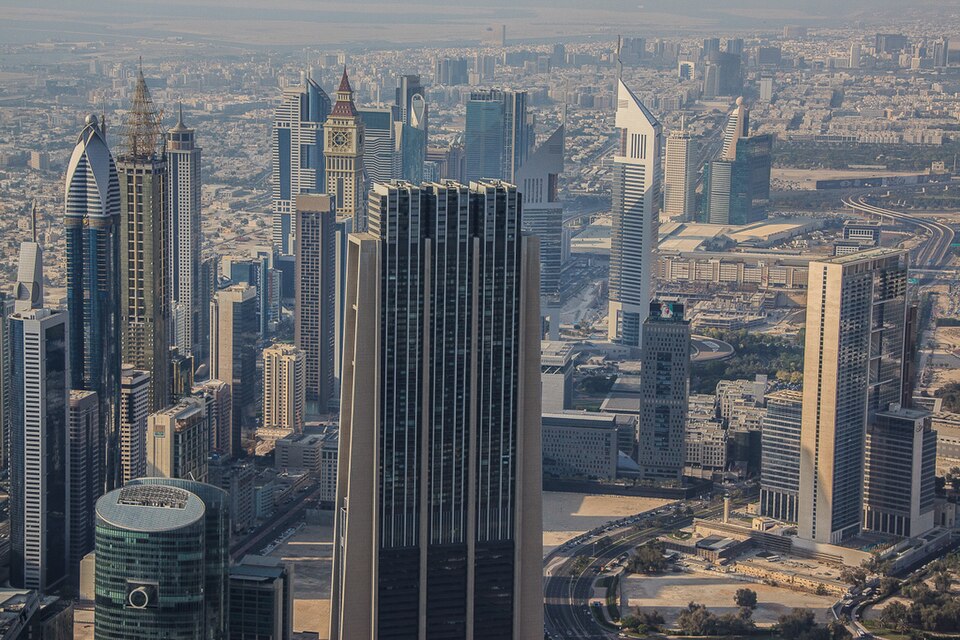
For readers following Dubai’s development as a financial centre, this is the central issue: attracting investors requires more than a large headline valuation. There must also be investable businesses and workable routes into and out of positions. This article explains the evidence and competing measures; it is not a stock recommendation, personalised investment advice or a forecast of prices. The archive photographs illustrate Dubai’s business setting, not live trading or Abu Dhabi’s exchange.
Independent and unofficial. Part of an editorial selection of 90 topics, not a popularity ranking. Details change; confirm with official sources before you travel.
You might also want to read

Dubai Future Week starts Wednesday: what to choose from the opening programme
The 18–21 November event spans Emirates Towers and the Museum of the Future. A fresh look at the opening-day listings helps separate public experiences from invitation-only meetings.
Read · 4 min
Today’s gold rate in Dubai: 20 November 2026 prices and what shoppers pay
Dubai Jewellery Group’s displayed 24K rate is AED 425.25 per gram in this dated snapshot. Here are the other karats, a worked jewellery example and the charges to separate before buying.
Read · 4 min
Topgolf Dubai: bay prices, booking choices and a better first visit
You do not need a handicap or your own clubs. The useful decisions are how many people share a bay, when you play and what the headline hourly rate leaves out.
Read · 4 min