Innovation · 3 min read
Museum of the Future and the Innovation Story
The museum’s ring, calligraphy and facade are worth understanding as architecture. Exhibition entry is a separate question: a temporary closure was recorded on 10 November.
Admission update, 10 November 2026: the museum’s official website displayed a temporary-closure notice, without a reopening date. This article discusses the architecture, not current interior admission. Check the museum’s current notice.
A building you read before you enter
The Museum of the Future stands beside Sheikh Zayed Road. Its oval ring sits on a green mound, with Arabic calligraphy cut into the stainless steel facade. The museum describes a structure without internal columns, assembled from individually fitted panels.
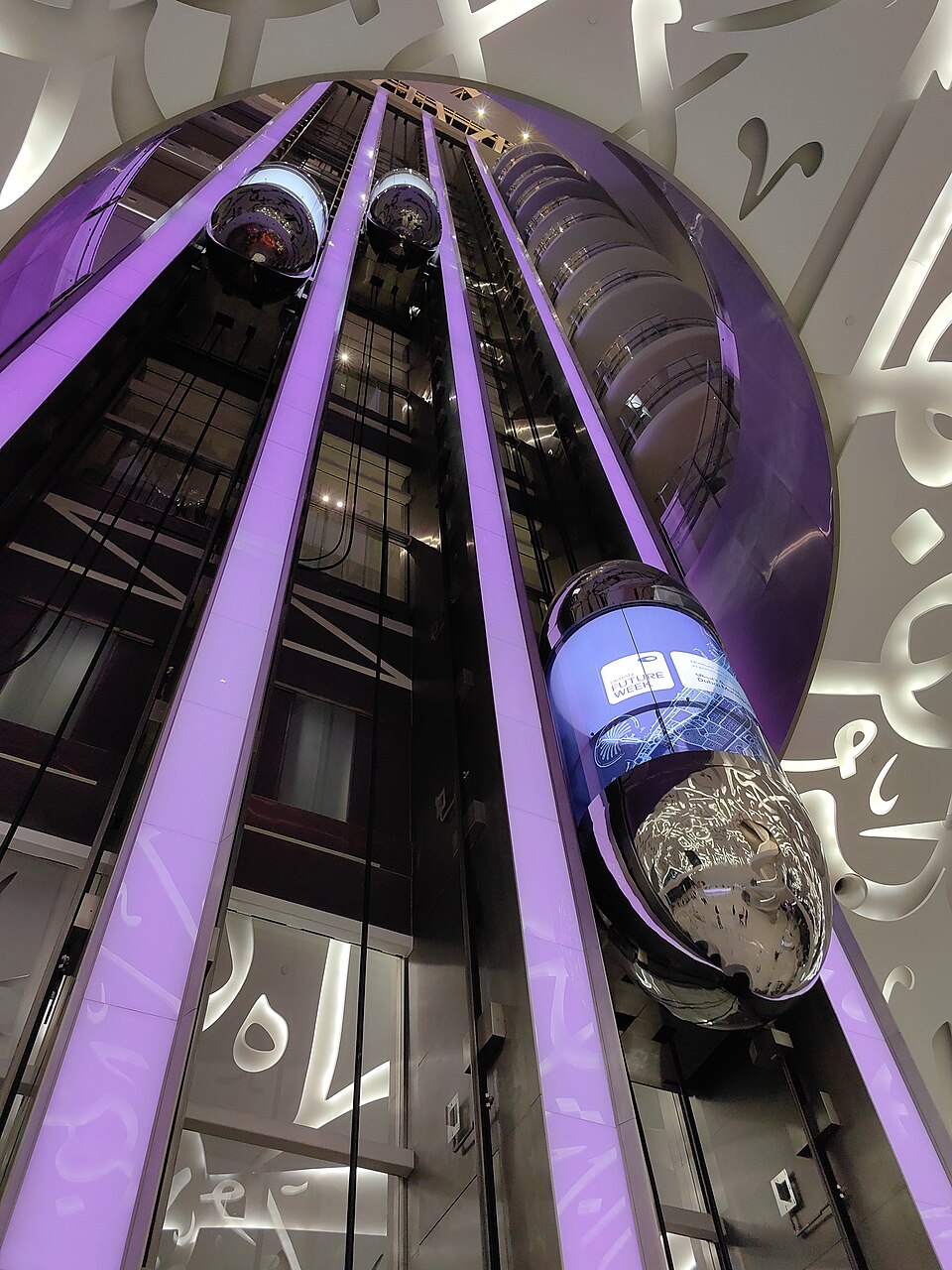
The calligraphy is a key feature. The museum states that the script comprises quotations from Sheikh Mohammed bin Rashid Al Maktoum, the ruler of Dubai, about the future, and the openings also allow daylight into the interior. It is architecture as text, and the building itself is as much a statement as a container.
Opening and purpose
The museum was inaugurated in February 2022, as reported by the Dubai Future Foundation, the body associated with it. Its stated aim is to explore possible futures, bringing together technology, design and ideas and inviting visitors to imagine what could happen next. It is described as a place for experiments, not a conventional history museum.
That focus on the future raises a useful point for any visitor. Exhibitions of this type present scenarios, not facts, and they reflect the priorities of their organisers. Approach them as prompts for discussion rather than predictions.
Innovation as civic identity
Dubai has made innovation a public theme, with government programmes, foundations and events devoted to technology and new ideas. The Museum of the Future is one expression of this, giving the theme a physical home. Whether this approach succeeds in producing durable benefits is a matter for ongoing assessment, and it is wise to separate branding from results.
Still, the emphasis tells you something about how the city thinks of itself: as a place that wants to be seen as looking forward. That outlook shapes many of its projects, from transport to public services to cultural institutions.
Questions to bring
Ask who benefits from the technologies on display and who might be left out. Ask what is realistic and what is speculative. Ask how the ideas would work in a city with a mix of residents, from highly mobile professionals to people on modest incomes.
Bringing questions turns a visit from a spectacle into a conversation. You do not have to reach conclusions, and a good future-oriented exhibition should leave you with more things to think about than when you came in.
Practicalities
Tickets, time slots and opening hours are managed by the museum, so check its official site before you go. Popular venues of this kind can sell out in peak periods, and booking ahead is usually sensible. Plan enough time to see the exterior as well, preferably in daylight and again in the evening when the facade is lit.
The nearby Metro station and walkways make access straightforward, though the final approach can be warm in summer. Combine your visit with a walk along the surrounding area to see how the building sits among older towers, and consider reading the museum's own account of the design before or after you go to deepen your appreciation of the details.
Reading the exterior slowly
Spend a few minutes outside before going in. Walk around the ring and watch how the calligraphic openings change as you move, how light falls through them and how the green mound beneath lifts the building from the road. The details reward patient attention.
Notice also how the building relates to the Metro and the highway. It is designed to be seen from moving vehicles as well as from the pavement, and that tells you something about how the city is experienced by most of its residents every day. Treat the visit as two experiences: first the public landmark, then the museum's changing ideas inside.
Independent and unofficial. Details change; confirm with official sources before you travel.