Nature & sustainability · 2026 guide · 7 min read
Hatta’s mountain landscape: the other side of Dubai’s 2026 travel story
Hatta’s appeal in 2026 is not just as an adventure stop, but as Dubai’s clearest mountain landscape: a protected reserve shaped by wadis, reservoirs, ancient water systems and rare geology, where wildlife, heritage and weather-sensitive outdoor activity intersect.
- Published
- Sources checked
- Not separately recorded
- Content updated
- By
- ComeVisitDubai editorial
Update note: Edited for clarity and repetition, with contextual photographs added. This copy edit is not a new full-article source check.
Based on the linked sources, not a first-hand visit. “Today” and “this week” refer to the publication date. Source checks and later edits are recorded separately. Editorial method and attribution.
Why Hatta matters as Dubai’s mountain counterpoint
Hatta is the side of Dubai that complicates the city’s usual image. In Dubai Municipality’s protected-areas framework, the Hatta Mountain Reserve stands apart as the emirate’s mountainous reserve, part of the Hajar range and defined by elevation, wadi systems and cultural depth rather than skyline spectacle. For 2026 visitors, that distinction matters because Hatta should be understood first as habitat and landscape, and only second as a leisure destination. The reserve is not simply a scenic backdrop for activities; it is a protected environment with ecological and historical significance that gives the area a different rhythm from urban Dubai.
That is why Hatta remains useful to a 2026 travel story even if a visitor never crosses into a single branded attraction. The reserve is one expression of a broader mountain destination where hotels, hiking, kayaking, biking and climbing operate nearby, but do not erase the fact that the landscape itself is the main draw. Dubai Municipality describes Hatta as a unique environment in the emirate, and the practical takeaway is simple: this is where the city gives way to terrain, and where travel planning needs to account for landform, weather and conservation before anything else.
A reserve built by elevation, water and stone
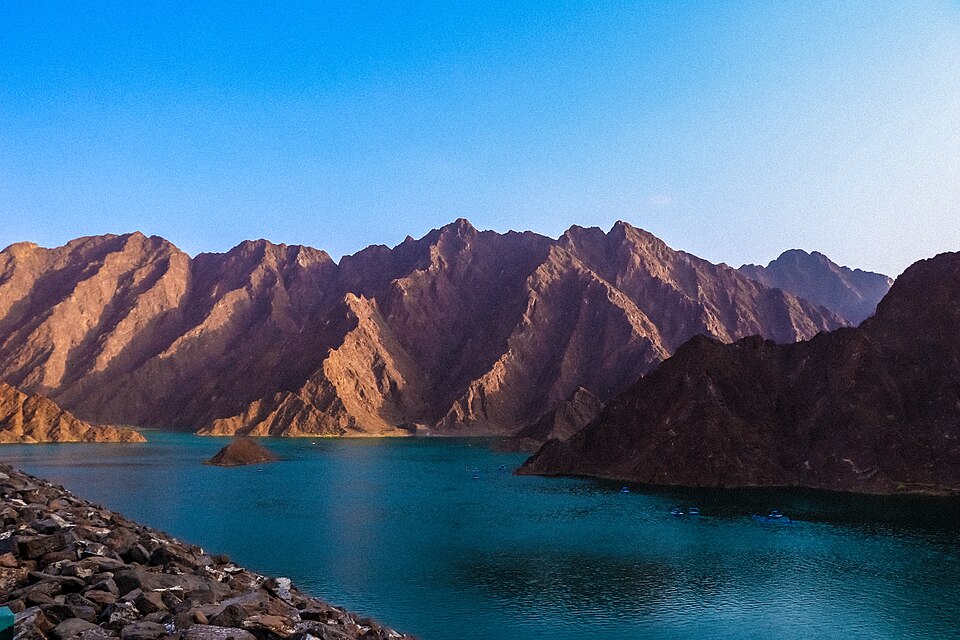
Hatta Mountain Reserve is defined by altitude in a way Dubai’s coastal and desert reserves are not. The source describes mountains rising from about 250 metres to 1,060 metres, making the area one of the highest and most geologically distinctive parts of the eastern Arabian Peninsula. Dubai Municipality also notes that the reserve contains one of the best exposed ophiolite formations in the world, a detail that matters beyond geology enthusiasts. Ophiolites are unusual rock sequences derived from marine sediments, ocean crust and mantle material that have been uplifted above sea level, which helps explain why Hatta feels so visibly different from the rest of Dubai.
The reserve’s hydrology is equally important. Hatta contains numerous wadis that store and distribute rainwater, and the main built feature mentioned by Dubai Municipality is two dams constructed in the early 1990s to store rainwater for agricultural use. Those reservoirs attract wildlife, especially birds such as the Grey Heron and Western Reef Heron. The practical implication for visitors is that Hatta’s appeal is tied to water in a mountain context: not as a constant guarantee, but as a seasonal and ecological feature that shapes what can be seen, supported and sustained in the landscape.
Wildlife and habitat: what the mountain reserve actually protects
Hatta’s importance is ecological, not just scenic. Dubai Municipality lists 128 bird species, 27 mammals, 20 reptiles, 133 plant species, 9 fish species, 2 amphibians and 29 invertebrates in the reserve, along with more than 215 wildlife species in total when the broader tally is considered. The flagship species is the Arabian Tahr, a mountain-adapted animal that signals the reserve’s conservation value. The reserve is also associated with the critically endangered Arabian Leopard, which is an especially meaningful reference because it places Hatta within a wider regional conservation narrative rather than a purely local one.
The habitat mix helps explain this biodiversity. Dubai Municipality identifies mountain slopes, wadis and freshwater pools as the key habitat types. In practical terms, that means the reserve is not a uniform hiking zone but a patchwork of niches where birds, small mammals, reptiles and water-dependent species can persist. The Hajar Mountains are also described as a stronghold for species such as Sand Partridge, Desert Lark, Striolated Bunting, Hume’s Wheatear and Scrub Warbler. For travelers, this is a reminder that Hatta rewards slower observation: the mountain landscape is not just something to cross, but something that supports life at different layers of elevation and moisture.
Heritage in the landscape, not beside it
Hatta’s cultural importance is embedded in the same terrain that makes the reserve biologically distinctive. Dubai Municipality cites traditional honey-gathering sites, Hatta Heritage Village, Hatta Fort, Hatta mosques and falaj systems that date back to the Iron Age. The reserve also contains 51 burial sites dating from roughly 2500 to 2000 BC, plus ancient petroglyphs scattered across the mountains. These are not decorative add-ons to the scenery; they show that human settlement, water management and movement through the mountains have been part of the area for millennia. In a city known for rapid modern development, that continuity gives Hatta unusual narrative weight.
The most useful way to think about this heritage in 2026 is as a reason to slow the trip down. Mountain landscapes often get reduced to viewpoints and checklist activities, but Hatta’s documented past asks for a different pace. Falaj systems, for example, are not merely heritage labels; they point to an older water logic in an arid region, where survival depended on distribution and maintenance rather than abundance. Likewise, the burial sites and rock art suggest that the mountains were not empty margins of Dubai’s story but active human terrain. A visitor who treats Hatta only as an excursion misses the fact that the reserve is also an archive in stone, water and settlement.
How to plan a mountain visit without overpromising the outdoors
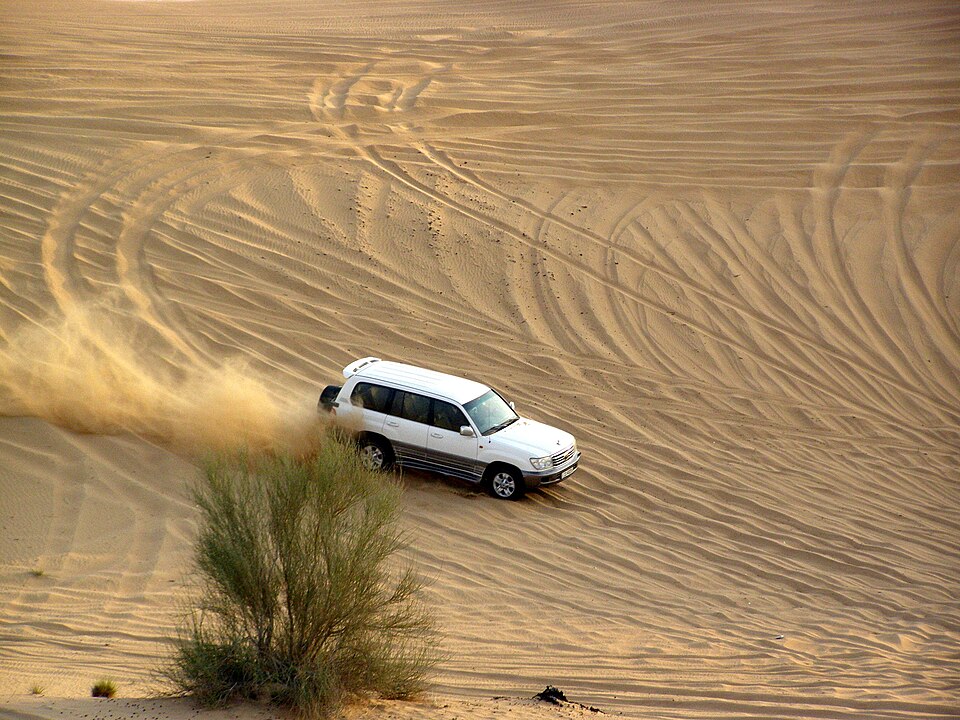
Dubai Municipality says Hatta has some of the best hiking routes in the UAE, and it also notes that tourists can visit for retreats in hotels and for activities such as kayaking, mountain climbing and biking in close proximity to the reserve. That wording is important: it does not mean every activity is equally available at all times, or that the reserve itself is a controlled theme park of outdoor experiences. In mountain destinations, access often depends on weather, trail conditions, safety management and the policies of the operator or venue providing the activity. For 2026 planning, the sensible approach is to separate the protected reserve from the commercial activity layer around it.
That distinction helps travelers avoid a common Dubai mistake: assuming one label covers everything. Hatta Mountain Reserve is a protected landscape; kayaking, biking or climbing may be nearby experiences, but they are not proof of any specific route, lake access or conditions on a given day. Weather matters more in mountains than in lowland city tourism, particularly where water, trails and exposed rock are involved. The best recommendation is to plan Hatta as a flexible outdoor day or overnight stay, with one eye on seasonal heat, rain risk and local operator guidance, and the other on the landscape itself rather than a fixed list of attractions.
How Hatta differs from Dubai’s other protected areas
Dubai Municipality’s protected-areas page is useful because it shows how unusual Hatta is within the wider conservation map. Ras Al Khor is a wetland; Al Marmoom is a desert reserve; Jabal Ali is coastal marine; Ghaf Nazwa and Al Wohoosh are desert landscapes with their own habitat signatures. Hatta is different because its identity is shaped by mountains, wadis and freshwater pools. That makes it the clearest example of Dubai’s environmental range, and it also explains why visitors who know only the city often find Hatta surprising. It is not a substitute for desert Dubai or beach Dubai. It is another ecosystem altogether.
This difference has practical meaning for travelers. In wetland, marine and desert reserves, wildlife viewing often comes down to timing, hides, tides or driving conditions. In Hatta, topography is the main organizing force: slopes, valleys, reservoirs and stone define the experience. The reserve’s cultural layer is also much more visible than in some other protected areas because farming, water storage and settlement history are part of the same landscape. If Dubai’s other reserves show how the emirate protects distinct environments, Hatta shows how the mountains themselves become a travel argument. That is why it belongs in a 2026 guide not as an adventure cliché, but as Dubai’s most legible mountain habitat.
Why the mountain landscape is the real headline for 2026
The continuing relevance of Hatta in 2026 lies in the way it ties together conservation, heritage and recreation without collapsing them into one product. Dubai Municipality’s protected-areas material places Hatta among the emirate’s officially recognised natural spaces, and it does so with unusually rich detail about geology, wildlife and history. That gives visitors a stronger reason to go than simple scenery alone. The mountain reserve offers a chance to understand how Dubai contains more than one environment, and how the emirate’s identity includes highland water systems, ancient settlement traces and species adapted to a rugged interior landscape.
For a traveler, the editorial lesson is to read Hatta as a landscape first and an activity zone second. That means leaving room for observation, not just itinerary density: the shape of the wadis, the reservoirs, the rock formations, the birdlife and the older human footprint all matter. In a year when Dubai travel can feel dominated by new openings and urban novelty, Hatta is valuable precisely because it resists that pace. It offers something quieter and more durable: a mountain reserve where habitat, heritage and weather still set the terms of the visit.
Independent and unofficial. Part of an editorial selection of 90 topics, not a popularity ranking. Details change; confirm with official sources before you travel.
You might also want to read

Dubai air quality today: how to check the live AQI
Air quality can differ by place and hour. Here is where to check Dubai’s official live readings, what the index means and how to use it when planning time outdoors.
Read · 2 min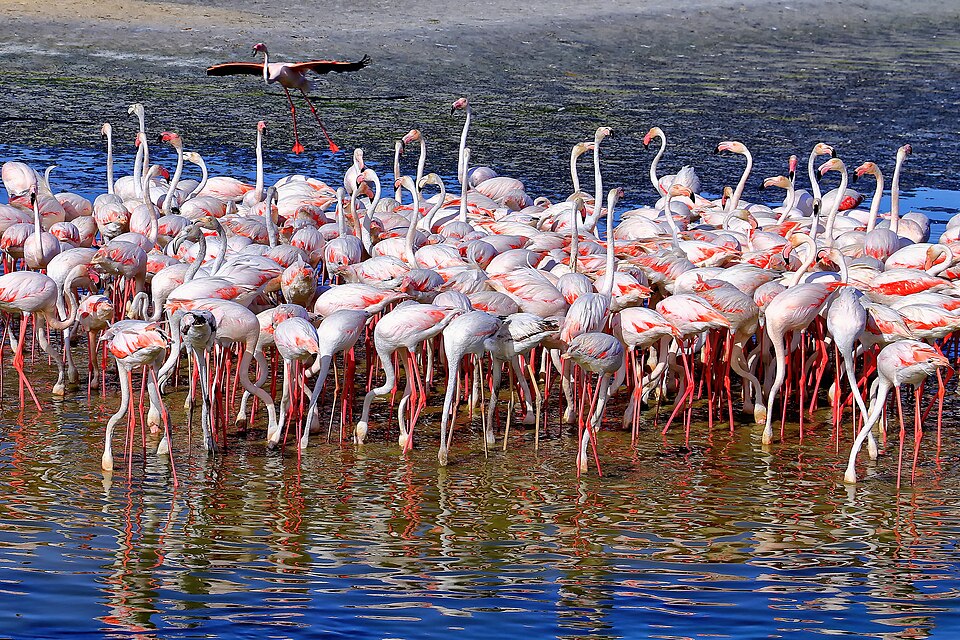
Ras Al Khor in 2026: the wetland behind Dubai’s nature-tourism story
Ras Al Khor is Dubai’s most revealing nature story: a Ramsar-listed wetland embedded in an intensely urban setting, famous for winter flamingos yet defined by broader biodiversity, protected habitats, and carefully managed public access through bird hides and education-led visitation.
Read · 8 minAl Marmoom: why an unfenced reserve needs careful visitors
Al Marmoom is unfenced, but it is not a blank canvas. Dubai Municipality frames it as a protected desert system built for sustainable recreation, where lakes, hides, and wildlife habitats demand restraint, route awareness, and respect for conservation rules.
Read · 3 min